Samarth Ramdas Swami
Samarth Ramdas Swami
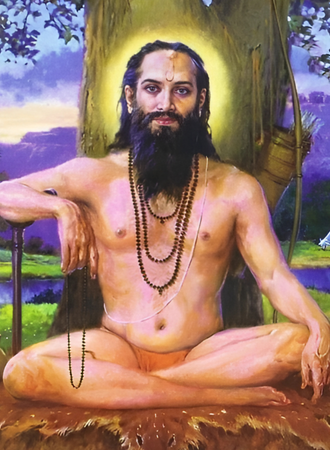
Samarth Ramdas Swami (c. 1608–1682) was a revered Hindu saint, philosopher, poet, and spiritual master from India. A devoted follower of Lord Rama and Hanuman, he is known for promoting strength, devotion, and dharma through his writings and teachings. Ramdas played a key role in inspiring spiritual and social awakening during the rise of the Maratha Empire.
Name – Samarth Ramdas Swami
Name – Sant Tukaram Maharaj
Born – Narayan Suryajipant Thosar c. 1608 Jamb, Ahmadnagar Sultanate
Died – 1682 (aged 73–74) Sajjangad, Satara, Maratha Empire
Religion – Hinduism
Philosophy – Bhakti Yoga
Samarth Ramdas Swami, originally Narayan Thosar, was born in 1608 CE on Ram Navami in Jamb village (Jalna district, Maharashtra) into a Deshastha Rigvedi Brahmin family. Deeply spiritual from childhood, he became introverted after his father’s death at age seven.
At age 12, he is believed to have abandoned his wedding and walked over 200 km to Panchavati, later settling at Taakli near Nashik. There, he spent 12 years in intense devotion to Lord Rama, practicing meditation, worship, and physical discipline. It was here he adopted the name Ramdas, and is said to have performed miracles, including reviving a dead man, gaining fame in Nashik.
Literary works – Samarth Ramdas Swami (1608–1682) was a renowned Marathi saint, poet, and spiritual leader, best known for his influential works like Dasbodh, Manache Shlok, and Sunderkand. A staunch devotee of Lord Rama and Hanuman, Ramdas emphasized discipline, devotion, and strength in both spiritual and social life.
Unlike Varkari saints, Ramdas advocated action and resistance, urging people to stand against injustice, including militant opposition to oppressive rulers of his time.
According to legend, he renounced worldly life at the age of 12 after hearing the word “Saawadhaana” during his wedding ritual. He walked over 200 km to Panchavati, eventually settling in Taakli near Nashik, where he lived as an ascetic for 12 years. There, he practiced intense meditation, worship, and physical training. One famous legend recounts him reviving a widow’s husband, earning him widespread reverence.
He is believed to have attained spiritual enlightenment at age 24, adopting the name Ramdas, and installing a Hanuman idol made of cow dung at Taakli.
Listed below are some of his notable literary works.
- Manache Shlok (co-written by Kalyan Swami)
- Dasbodh
- Shree Maruti Stotra
- Aatmaaram
- 11-Laghu Kavita
- Shadripu Nirupan
- Maan Panchak
- Chaturthmaan
- Raamayan (Marathi-Teeka)
Philosophy – Samarth Ramdas Swami was a key proponent of Bhakti Yoga, emphasizing devotion to Lord Rama as the path to spiritual growth. His concept of Bhakti aligned with the principles of Advaita Vedanta, promoting inner realization through selfless devotion and discipline.
Samarth sect – Ramdas initiated the Samarth sect to revive spirituality among the various sections of Indian society. He established several matha during his lifetime.
Chhatrapati Shivaji Maharaj Bhonsle – Chhatrapati Shivaji Maharaj, the first Maratha ruler, was a devoted disciple of Samarth Ramdas Swami. The saint’s spiritual guidance and teachings of dharma, courage, and devotion greatly influenced Shivaji’s vision and leadership, playing a key role in shaping the foundation of the Maratha Empire.
Guru Hargobind – According to the Sikh manuscript Panjāh Sakhīān and the Marathi text Ramdas Swamichi Bakhar, Samarth Ramdas Swami met Guru Hargobind, the sixth Sikh Guru, in the early 1630s at Srinagar near the Garhwal hills during a pilgrimage.
In a profound exchange, Ramdas questioned the Guru’s role as both a spiritual leader and warrior. Guru Hargobind replied, “Internally a hermit, externally a prince—arms are for protecting the poor and defeating tyranny.” Deeply moved, Ramdas responded, “Yeh hamare man bhavti hai” (“This appeals to my mind”).
Ramdas moved all across the Indian subcontinent and usually resided in caves.
- Ramghal, Sajjangad
- Morghal, at Morbag near Sajjangad
- Tondoshighal, north of Chaphal
- Taakli, near Nashik
- Chandragiri, opposite Vasantgad, near Karad
- Helwak, near Helwak village
- Shiganwadi, near Chandragiri
- Shivtharghal, near Mahad
In his final days, Samarth Ramdas Swami observed Praayopaveshana—a sacred fast unto death—abstaining from food and water for five days. He continuously chanted the Taaraka Mantra: “Shree Ram Jai Ram Jai Jai Ram”, while resting beside a Rama idol from Tanjore. His devoted disciples, Uddhav Swami and Akka Swami, cared for him during this period. Uddhav Swami later performed his final rites.