Sant Pundalik
Sant Pundalik
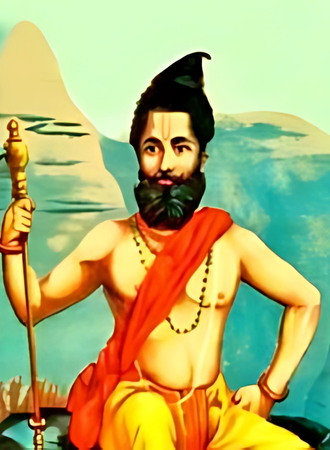
Pundalik (also known as Pundarika) was a revered Indian saint and devotee of Lord Vithoba, a form of Vishnu and Krishna. He is credited with bringing Vithoba to Pandharpur and is considered the founder of the Varkari tradition. A master of Kundalini Yoga, Pundalik’s name is linked to the awakening of Kundalini energy, symbolized through Vithoba’s iconography. In this spiritual context, the brick Vithoba stands on represents the Muladhara Chakra, his arms symbolize Ida and Pingala nadis, and the tilaka marks the Ajna Chakra—connecting the deity to deeper yogic and spiritual symbolism.
Name – Sant Pundalik
Born – 13 dec 1924
Parents – Janudev (father), Satyavati (mother)
Religion – Hinduism
Pundalik is widely regarded as the historical founder of the Varkari sect centered on Lord Vithoba in Pandharpur. Scholars like R.G. Bhandarkar credit him with spreading Vithoba worship across the Maratha region. Some suggest he aimed to unify Shiva and Vishnu worship, possibly influenced by Karnataka’s Haridasa tradition. He is also believed to have convinced Hoysala king Vishnuvardhana to build the Pandharpur temple in the 12th century. Pundalik’s legacy led to Pandharpur being called Paundrika-Kshetra. However, some scholars question his historicity, viewing him as a mythological figure derived from Puranic legends.
The legend of Pundalik and Vithoba is told through three textual traditions: the Varkari, the Brahmin, and a hybrid “third tradition.” Varkari texts, written in Marathi, include Bhaktalilamrita and Bhaktavijaya by Mahipati, Pundalika-Mahatmya by Bahinabai, and an abhanga by Namdev. Brahmin texts, composed in Sanskrit, feature multiple Panduranga-Mahatmya versions from the Skanda, Padma, and Vishnu Puranas, and the Bhima-Mahatmya. The third tradition combines both elements, with Marathi works by Brahmin authors like Sridhara (750 verses) and Prahlada Maharaj (181 verses).
One key version in the Skanda Purana describes Pundalik as a devoted son and Vishnu worshipper. Lord Krishna, in his cowherd form from Govardhana, appears before him—unclothed, adorned with makara-kundalas, the srivatsa mark, peacock feathers, and holding a staff—symbolizing divine grace and simplicity.