Sant Bahinabai
Sant Bahinabai
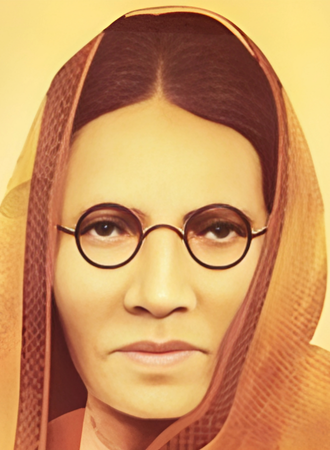
Bahinabai (1628–1700) was a revered female Varkari saint and disciple of Sant Tukaram from Maharashtra. Born into a Brahmin family, she was married young to a widower and faced hardship, including abuse, due to her spiritual devotion.
In her Marathi autobiography Atmamanivedana, she shares visions of Lord Vithoba and Tukaram, along with her inner struggles. Unlike many female saints, Bahinabai remained married, balancing her duties as a wife with her deep bhakti (devotion). Her heartfelt abhangas reflect the pain of womanhood, spiritual longing, and the conflict between worldly roles and divine love.
Name – Sant Bahinabai
Born – 1628 Devgaon rangari near Ellora, Maharashtra, India
Died – 1700 (aged 71–72)
Burial place – Shivoor, Vaijapur, Aurangabad
Notable work – Autobiography Atmamanivedana or Bahinibai Gatha, devotional abhangas, Pundalika-Mahatmya
Honors – Sant in Marathi, meaning “Saint”
Bahinabai (1628–1700), a prominent Varkari saint and poet, authored her spiritual autobiography Atmamanivedana or Bahinibai Gatha, describing her current and twelve past lives. The first 78 verses detail her early life.
Born in Deogaon near Ellora to Brahmin parents Aaudev and Janaki, Bahinabai was seen as a symbol of good fortune. From a young age, she chanted God’s name and showed deep spiritual inclination.
Married at age three to a 30-year-old widower, Gangadhar Pathak, she stayed with her parents until puberty, as per tradition. After a family dispute, they wandered across Maharashtra with pilgrims, visiting Pandharpur, the sacred city of Lord Vithoba, before settling in Kolhapur. Despite being pushed into married life by age eleven, Bahinabai remained spiritually detached, focusing on her path of bhakti.
In Kolhapur, Sant Bahinabai was inspired by Hari-Kirtanas and the Bhagavata Purana. A spiritual turning point came through her encounter with a calf, believed in Varkari tradition to be a soul with past yogic merit. The calf followed her everywhere and was blessed by Swami Jayaram, sparking jealousy and abuse from her husband. After the calf’s death, Bahinabai had profound visions of Lord Vithoba and Tukaram, who gave her the mantra “Rama-Krishna-Hari” and initiated her into bhakti.
Despite being abused and confined by her husband, Bahinabai remained devoted both to him and to God. Though criticized for following Tukaram, a Shudra saint, she chose devotion over social norms. Her husband’s eventual repentance marked a turning point. Bahinabai later realized that serving her husband was also a form of divine service, blending householder duties with spiritual devotion—a recurring theme in her Marathi abhangas. “serving him was more important than devoting herself to (another) god.” Bahinabai writes: I’ll serve my husband – he’s my god …
My husband’s my guru; my husband’s my way this
is my heart’s true resolve.
If my husband goes off, renouncing the world,
Pandurang (Vithoba), what good will it do me to live among men? …
My husband’s the soul; I’m the body …
My husband’s the water; I’m a fish in it.
How can I survive? …
Why should the stone god Vitthal (Vithoba)
and the dream saint Tuka (Tukaram)
deprive me of the happiness I know?
During a visit to Dehu, the hometown of Sant Tukaram, Bahinabai, a Brahmin, accepted the lower-caste Sudra Tukaram as her guru. This sparked outrage among local Brahmins, leading to harassment and threats of ostracism.
In Dehu, Bahinabai gave birth to a daughter, Kasibai, but faced deep emotional distress and contemplated suicide. A vision of Tukaram stopped her, blessing her with poetic inspiration and foretelling the birth of a son—her companion from a past life. She soon began composing abhangas dedicated to Lord Vithoba and later gave birth to her son, Vithoba, as mentioned in her autobiography Atmamanivedana.
Bahinabai (1628–1700), a saint-poet of the Varkari tradition, composed powerful abhangas alongside her autobiography. Her verses praise Lord Vithoba, the Atman, the Sadguru, and explore themes like devotion, sainthood, and Brahmanhood. Unique among women saints, Bahinabai remained married, portraying her difficult relationship with her husband with empathy and spiritual insight.
Her poetry reflects the inner conflict between her role as a pativrata (devoted wife) and her yearning for virakti (spiritual detachment). Rather than rejecting tradition, she advocated a balance between worldly duties (pravrtti) and spiritual renunciation (nivrtti). Bahinabai often lamented being born a woman, as it denied her access to sacred knowledge, highlighting the gender bias in Brahmin society. Her voice remains a powerful blend of devotion, rebellion, and spiritual longing. Bahinabai sings in her abhanga: The Vedas cry aloud, the Puranas shout
“No good may come to woman.”
I was born with a woman’s body
How am I to attain Truth?
“They are foolish, seductive and deceptive –
Any connection with a woman is disastrous.”
Bahina says, “If a woman’s body is so harmful,
How in this world will I reach Truth?”
Bahinabai’s abhangas often plead with Lord Vithoba (Panduranga, Hari) for strength to balance her roles as a devoted wife and spiritual seeker. Her famous line, “A woman’s body is a body controlled by someone else; renunciation is not for her,” reflects the harsh realities faced by women in 17th-century India. Her poetry powerfully highlights the limited freedom of women and the struggle to find spiritual identity within societal constraints.