
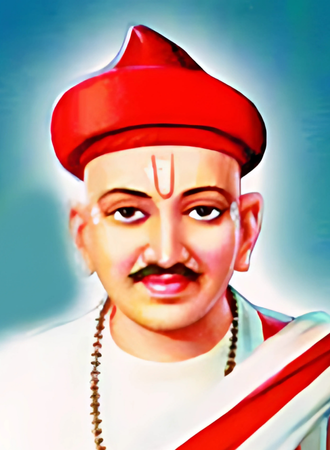
Sant Damaji Pant
Sant Damaji Pant
Sant Damaji Pant was a 15th-century Marathi saint and Varkari devotee of Lord Vithoba. Serving as the Kamavisdar (revenue officer) of Mangalvedha under the Bahamani king, he is remembered for his compassion during the 1460 famine. Defying royal orders, he distributed grain to the starving. Legend says Lord Vithoba, disguised as an outcaste, repaid the debt with gold. The famine is still remembered as “Damaji Pant’s famine” in the Deccan for his selfless service.
Name – Sant Damaji Pant
Sant Damaji Pant’s exact dates of birth and death are not definitively known.
Religion – Hinduism
The life of Sant Damaji Pant is beautifully chronicled in Bhaktavijaya by Mahipati (1715–1790). A wise, brave, and generous revenue officer under the Bahmani Sultan of Bidar, Damaji managed the grain stores in Mangalvedhe, near Pandharpur, the holy town of Lord Vithoba.
During a severe famine, a starving Brahmin from Pandharpur sought help, and Damaji responded with kindness. As desperation spread, he realized that opening the royal granaries could save entire towns — despite the risk of execution by the Sultan. His bold act of compassion became a timeless symbol of selfless service and Varkari devotion.
Though once considered a legendary figure, historian V.K. Rajwade found a mahajar (royal document) bearing Damaji Pant’s name and handwriting, confirming his historical presence. Issued by the Badshah of Bidar, it highlights caste customs and rights, linking Damaji to royal authority.
The 1460 famine, caused by monsoon failure across Western India, is widely known as “Damaji Pant’s famine” due to his heroic grain distribution. Some accounts also associate him with the Durga Devi famine (1396–1408) or the 1468–1475 famine, reflecting his enduring legacy of compassion and service.
Sant Damaji Pant is honored in Bhaktavijaya and praised in the abhangas of Eknath and Tukaram, who recognize him as a true saint. Eknath even describes Lord Vithoba appearing as a Mahar to save Damaji.
His legacy lived on during the Great Famine of 1876–78, when Solapur’s collector, Mr. Grant, was nicknamed “Damaji Pant” for his relief efforts. A temple dedicated to Damaji Pant still stands in his hometown of Mangalvedha, celebrating his compassion and service.