Sant Eknath
Sant Eknath
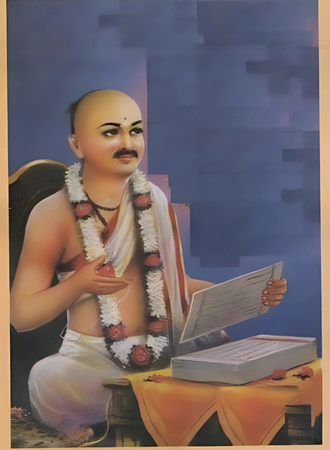
Eknath (1533–1599) was a revered Hindu saint, poet, and philosopher of the Warkari tradition in Maharashtra. A devoted follower of Lord Vitthal, he is considered a spiritual successor to saints Dnyaneshwar and Namdev, and a key figure in the Bhakti movement.
Name – Sant Eknath
Born – 1533 Present-day Paithan Taluka, Sambhaji nagar, Maharashtra, India
Died – 1599 (aged 65–66)
Parents – Suryanarayan (father), Rukminibai (mother)
Honors – Sant (Saint)
Religion – Hinduism
Philosophy – Advaita, Varkari
Sant Eknath, a revered 16th-century saint of the Warkari tradition, was born in Paithan, Maharashtra, into a Deshastha Rigvedi Brahmin family of Vishwamitra gotra. Orphaned at a young age, he was raised by his grandfather Chakrapani. His great-grandfather, Sant Bhanudas, was also a respected saint. Eknath was a disciple of Janardan Swami, a devotee of Lord Dattatreya. His samadhi is located on the banks of the Godavari in Paithan, where annual celebrations are held in March to honor his legacy.
Sant Eknath was a visionary Marathi saint-poet who used his literary genius to promote devotion and social equality. He composed spiritual texts in simple Marathi, making religion accessible to all while challenging caste discrimination.
His major works include Eknathi Bhagavata (a Marathi retelling of the Bhagavata Purana) and Bhavarth Ramayan. He also penned Rukmini Swayamwar Hastamalak with 764 verses and introduced a unique devotional song form called Bharood, writing over 300 of them.
Eknath proudly defended Marathi as a divine language, equal to Sanskrit, and enriched it with spiritual depth through works like Shukashtak, Sukha, Ananda-Lahari, Geeta-Saar, and Prahlad-Vijaya.